
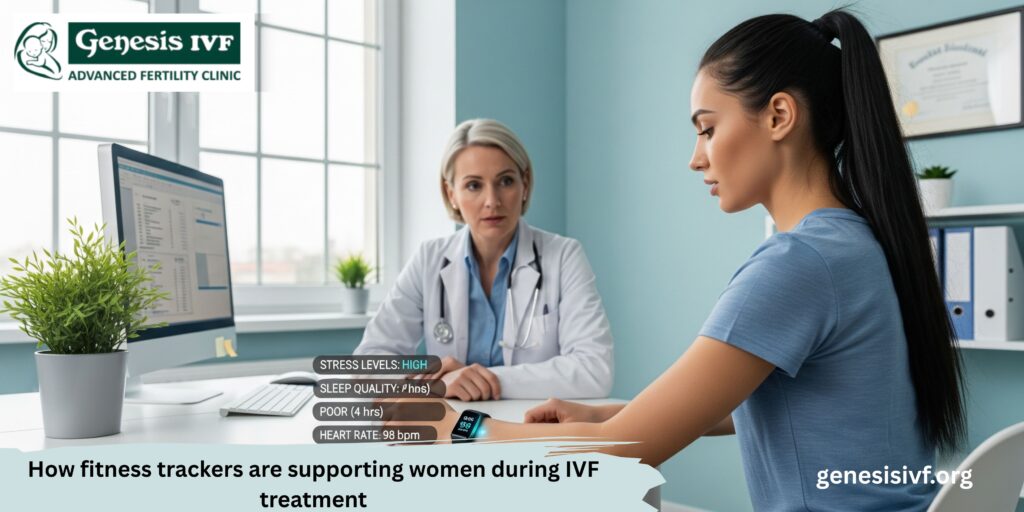
In recent years, fertility treatments have taken a huge leap forward with the integration of technology. One of the most exciting trends in 2025 is Fitness trackers are supporting women during IVF treatment. With growing awareness, people are turning to devices that help track cycles, hormone levels, and physical changes – all in real time. At Genesis IVF Advanced Fertility Clinic Erode, we now see patients using these tools to enhance their IVF journey and provide us with better insights for treatment planning.
Smart, real-time tracking is changing IVF like never before
Trackers like Ava, Oura Ring, Apple Watch fertility apps, and specialized hormone-detecting patches are becoming more common among women trying to conceive. These devices track important markers like body temperature, heart rate variability, sleep patterns, and even respiratory rate. More advanced tools are now capable of detecting hormonal fluctuations such as LH (luteinizing hormone) surges and estrogen levels – crucial for predicting ovulation and planning embryo transfer accurately.
This growing trend is not just about convenience. It’s about understanding your body better and giving fertility specialists additional data to personalize treatment. That’s how fitness trackers during IVF treatment makes fertility care smarter and more responsive.

The real impact: How Fitness trackers are supporting women during IVF treatment revolutionizing IVF monitoring in 2025
1. Accurate ovulation tracking
Traditional ovulation kits provide a one-time result, but wearables collect continuous data, making it easier to pinpoint fertile windows with better accuracy.
2. Early detection of cycle irregularities
Many women don’t realize their cycles are irregular until they undergo IVF. Wearables provide cycle trend data months before treatment, which helps in early identification and correction of issues.
3. Stress monitoring
Stress impacts IVF success. Some wearables now track stress levels through heart rate variability, allowing patients and doctors to take early steps toward stress management.
4. Better communication with clinics
Genesis IVF uses patient-approved data from wearable apps to align treatment schedules and hormone support with each individual’s actual body patterns.
is reliable for IVF tracking?
This is a common question many IVF patients ask. While tracking apps is not a replacement for lab tests and ultrasound scans, it serves as a powerful complementary tool. The key lies in combining medical-grade testing with daily insights provided by wearables. Our fertility specialists analyze this data with caution and use it to fine-tune protocols for ovulation induction, embryo transfer timing, and medication adjustments.
That’s another example of how fitness trackers during IVF treatment by creating a stronger bridge between patients’ real-life data and clinical accuracy.

Guidance from experts makes all the difference
Not all apps are built for fertility support. It is essential to choose medically validated devices and apps. Avoid self-diagnosing based on numbers alone. Always consult your IVF specialist before making any treatment decisions based on wearable data.
At Genesis IVF Advanced Fertility Clinic Erode, we guide our patients on which tools are safe and reliable to use, and how to interpret the results alongside their treatment.
Understanding how Fitness trackers are supporting women during IVF treatment can help couples take proactive steps, improve communication with their doctors, and stay more in tune with their fertility journey. At Genesis IVF Advanced Fertility Clinic, we support innovation that empowers patients. If you’re planning IVF or exploring fertility treatment, talk to our specialists about fitness trackers during IVF treatment and how it can support your journey.